Why this one is unusually rare#
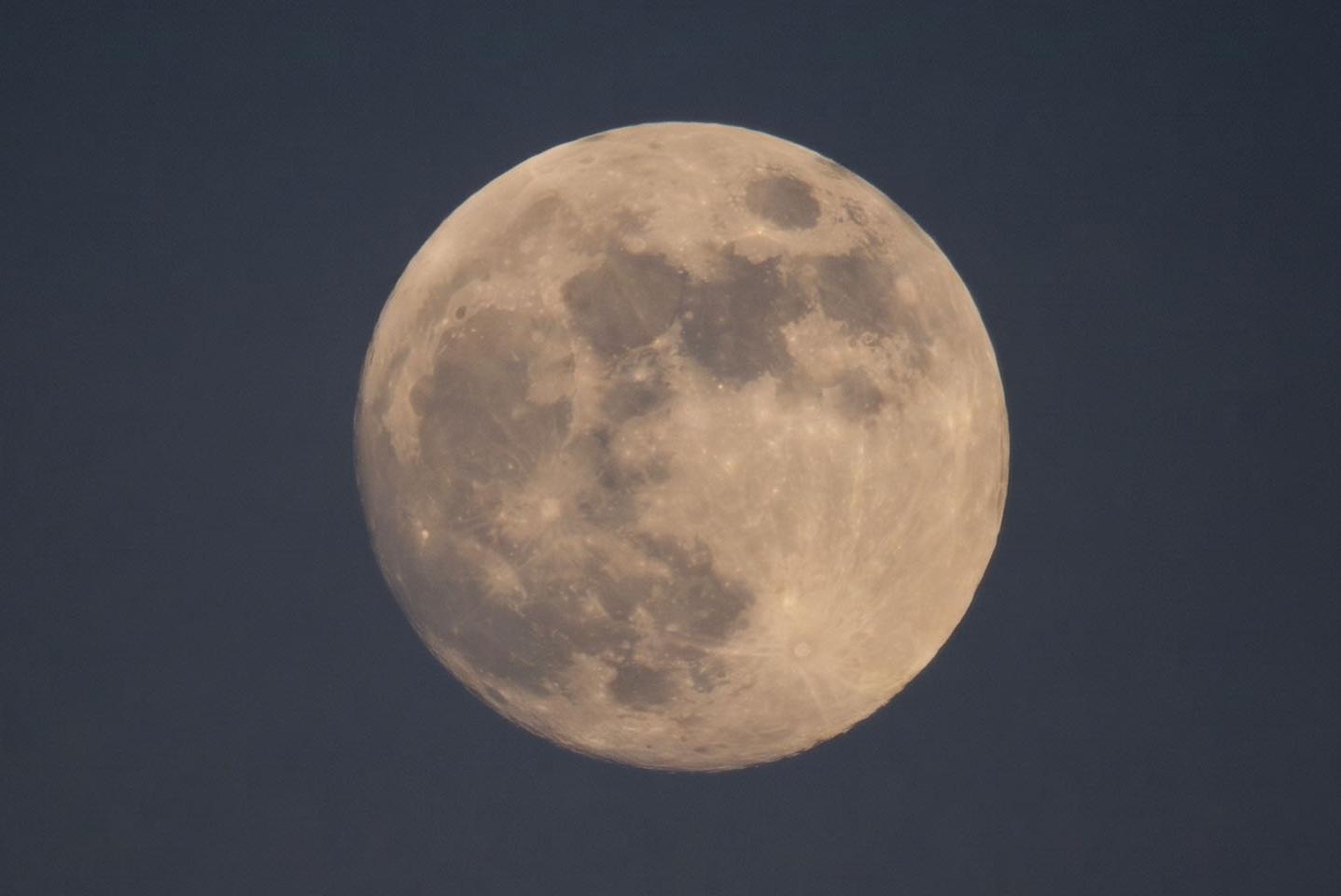
A full moon last fell on Christmas Eve in 2007, but a full moon that close to Earth on that date has not happened in more than two centuries, according to the BBC. Carys Herbert, an astronomer at the Royal Observatory Greenwich, told BBC Newsround that definitions of a supermoon vary: some require the Moon to come within 360,000 kilometres of Earth, while NASA and the Observatory use a looser standard based on how close the Moon is to perigee, its nearest approach to Earth.bbc.co.uk 1 source for this line, starting with BBC
Herbert said that using the stricter definition, the most recent Christmas Eve full moon at perigee was in 1787, but the more generous definition, which she said is increasingly the standard, places one in 2007 and another in 1912, the BBC reports.bbc.co.uk 1 source for this line, starting with BBC
Yahoo cites historical lunar data placing the closest comparable Christmas Eve full moon on December 24, 1787, calling it the closest in 239 years. NASA sets its own threshold for what counts as a supermoon, while other astronomy references apply a tighter distance cutoff, Yahoo reports.tech.yahoo.com 1 source for this line, starting with YAHOO!
When and where to look#
Yahoo reports that next month's supermoon may be visible from December 23 to December 25, depending on location. Citing the BBC's Sky at Night magazine, Yahoo reports the full moon will reach peak illumination at 8:28 p.m. EST on December 23, while the Moon reaches its closest point to Earth at about 4:30 a.m. EST on Christmas Eve, making the evening of December 23 or 24 the best viewing window.tech.yahoo.com 1 source for this line, starting with YAHOO!
Perigee, the Moon's closest point to Earth, sits at approximately 226,000 miles, while apogee, its farthest point, is around 251,000 miles away, Yahoo reports citing NASA figures. The Moon's orbit is an oval rather than a circle, which is why its distance from Earth, and its apparent size, changes throughout the month, according to the BBC.tech.yahoo.com+1 2 sources for this line, starting with YAHOO!
Other full moons draw separate readings#
A separate full moon landing in Gemini on November 24 is being read in astrological terms elsewhere. Forever Conscious describes it as the first in a run of four supermoons stretching toward an eclipse season in February 2027, and says Uranus near this particular full moon can bring scattered, restless or anxious feelings. Separately, the Times of India reports a November 24 full moon in Taurus, which it says reaches fullness at 8:23 PM IST, and describes the Moon as in its sign of exaltation in Vedic astrology that day.foreverconscious.com+1 2 sources for this line, starting with Forever Conscious