The Leonids appear to radiate from Leo#
The shower takes its name from Leo, the constellation containing its radiant, the point from which its meteors appear to originate. Yahoo reports that the best viewing comes in the second half of the night, after that point rises above the horizon.tech.yahoo.com 1 source for this line, starting with YAHOO!
Leonid meteors can flash across any part of the sky rather than only near Leo. The annual shower comes from debris left by Comet Tempel-Tuttle, according to The Korea Daily, which places the peak on November 17 and 18.tech.yahoo.com+1 2 sources for this line, starting with YAHOO!
The Leonids have produced far larger displays in the past. NASA records thousands of meteors per minute during the 1966 storm, Yahoo reports, though no meteor storm is anticipated in 2026.tech.yahoo.com 1 source for this line, starting with YAHOO!
Mars and Jupiter meet near the Taurids#
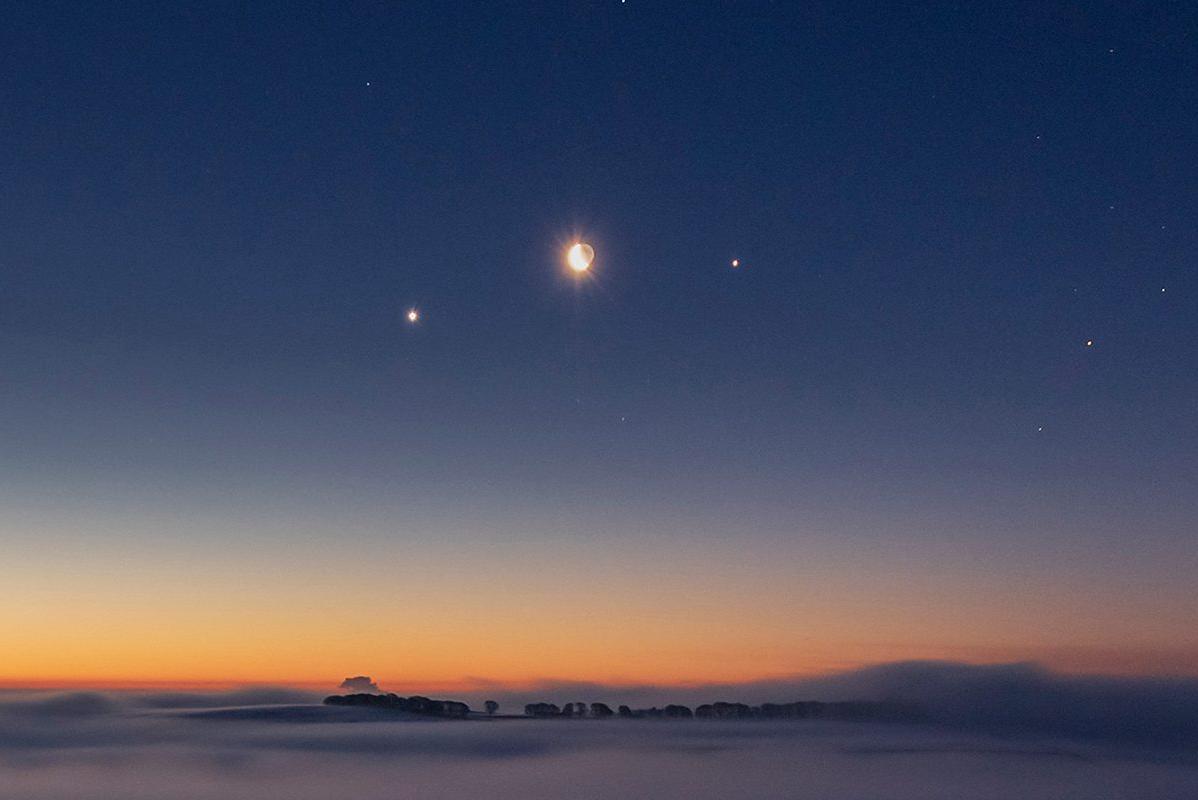
The Korea Daily reports that Mars and Jupiter appear side by side on the mornings of November 15 and 16, between 4 a.m. and 6 a.m. Their conjunction, an apparent close pairing in the sky, occurs only once every few years, the outlet says.en.koreadaily.com 1 source for this line, starting with en.koreadaily.com
The Northern Taurid meteor shower peaks on the night of November 11 into November 12, according to The Korea Daily. In areas with little light pollution, about 10 to 15 meteors per hour could be visible, including a higher-than-usual chance of fireballs, meteors brighter than Venus.en.koreadaily.com 1 source for this line, starting with en.koreadaily.com
The Northern Taurids remain active through December 10, CW39 Houston reports. Later in December, the Geminids meteor shower is due to peak on December 13 and 14, according to KOCO 5 News.cw39.com+1 2 sources for this line, starting with CW39 Houston
- en.koreadaily.comSouthern California November night sky — Meteor showers, planetary alignment & supermoon(opens in a new tab)
- cw39.comMissed the Southern Taurid peak? A better meteor shower viewing opportunity is coming(opens in a new tab)
- koco.comTwo meteor showers will light up Oklahoma skies this week. Here’s when to watch(opens in a new tab)