Where to find it near Taurus and the Pleiades#
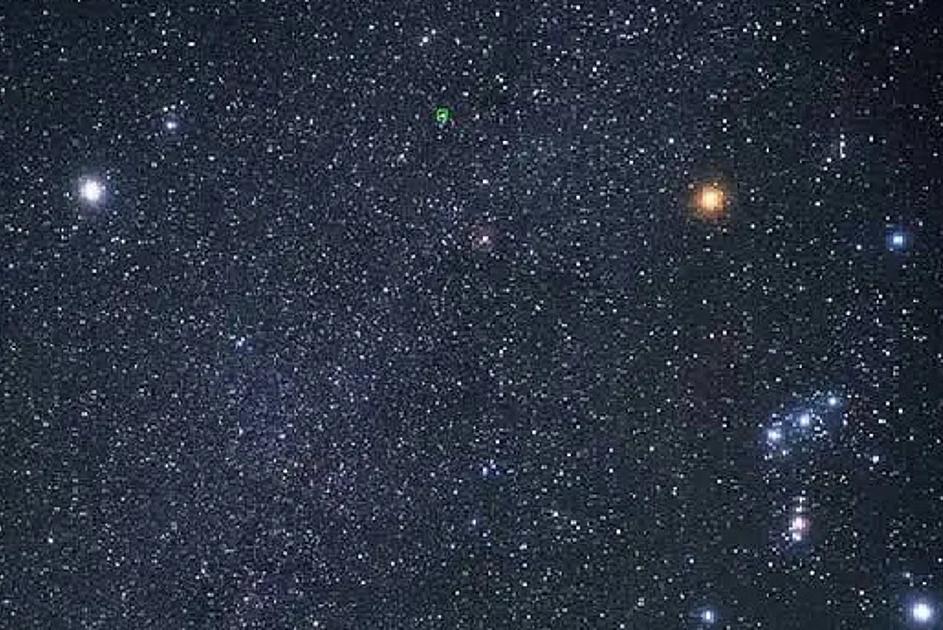
Uranus will be positioned toward Taurus, near the Pleiades star cluster, also called the Seven Sisters, Travel and Leisure Asia reports. The outlet suggests seeking out areas where the sky is clear and dark skies prevail, naming Changi Beach Park, Singapore Botanic Gardens, Upper Seletar Reservoir and Yishun Dam as good spots, and recommends using a star map or astronomy app plus a telescope with suitable magnification for easier viewing.travelandleisureasia.com 1 source for this line, starting with Travel and Leisure Asia
Astronomy magazine's sky column for November 20 to 27 places Uranus in Taurus, easy to find between the star Aldebaran and the Pleiades, and notes the Moon is set to occult the cluster, pass in front of it, on November 24. The same column tracks Mercury reaching its greatest western elongation, its widest apparent separation from the Sun, and describes Venus's disk spanning 46 arcseconds while only 19% lit, compared with Mercury's smaller 7-arcsecond disk at 62% lit.astronomy.com 1 source for this line, starting with Astronomy
Opposition explained and what else Singapore can see#
Opposition occurs when Earth passes between the Sun and a planet, placing that planet opposite the Sun in the sky, a configuration in which the body appears nearly fully lit and close to its largest and brightest, according to the Wikipedia entry on the phenomenon. Uranus itself is a gaseous ice giant made largely of water, ammonia and methane, with a marked axial tilt of 82.23 degrees, per Wikipedia.en.wikipedia.org 1 source for this line, starting with Wikipedia
The Straits Times reported on November 16 that Singapore's Science Centre Observatory flagged three celestial appearances between November 17 and 25: the Leonid meteor shower, peaking around November 17 to 18 and best seen between 3am and 5:30am with up to 15 meteors an hour under ideal conditions; the Beaver Moon, the second of the year's three supermoons, reaching full phase around 10:54pm on November 24; and the Uranus sighting opportunity.straitstimes.com 1 source for this line, starting with The Straits Times
The Straits Times also reported that the next Uranus opposition after this month's is expected on November 30, 2027.travelandleisureasia.com 1 source for this line, starting with Travel and Leisure Asia
- en.wikipedia.orgOpposition (astronomy)(opens in a new tab)
- en.wikipedia.orgUranus(opens in a new tab)
- straitstimes.comA constellation of events to light up Singapore skies(opens in a new tab)
- travelandleisureasia.comUranus reaches its brightest point of the year at opposition on November 25(opens in a new tab)