
Mars and Jupiter change places#
At the start of November, Mars rises around 1 a.m. local time, followed about 30 minutes later by Jupiter, Yahoo News Canada reports. The pair rises earlier each night, with Jupiter appearing progressively closer to Mars during the first two weeks of the month.ca.news.yahoo.com 1 source for this line, starting with Yahoo News Canada
After the conjunction, Jupiter rises first and Mars follows, with their apparent separation growing through the rest of November, according to Yahoo News Canada. Space gives a different date for the planets' passing, placing it on November 16.ca.news.yahoo.com+1 2 sources for this line, starting with Yahoo News Canada
Saturn is visible in the southern sky during mid-to-late evening, Space reports. Space says Venus rises in the east-southeast before dawn, while Mercury appears to its lower left from midmonth through the end of November.space.com 1 source for this line, starting with Space.com
Leonid peak estimates differ#
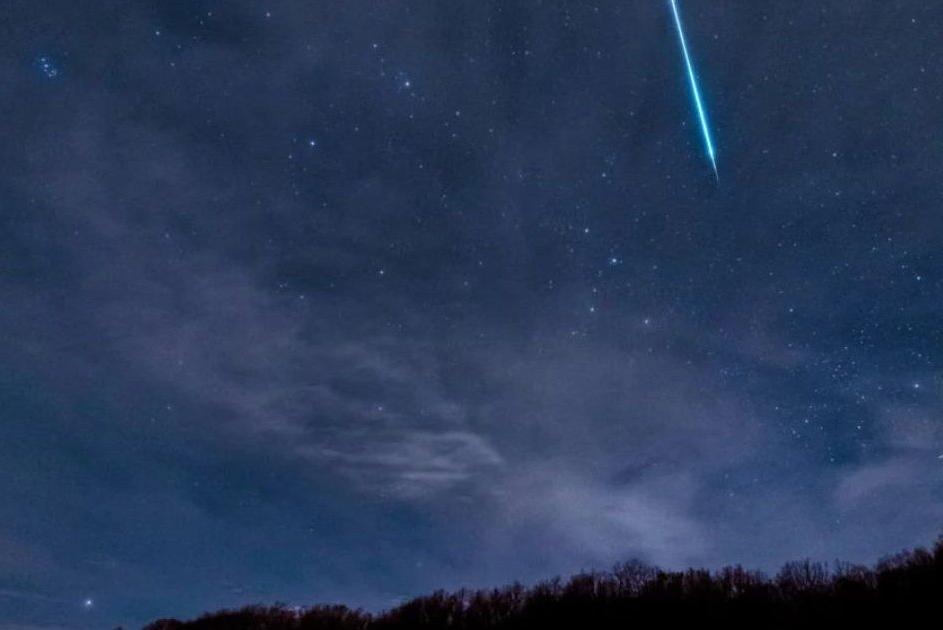
The Leonid meteor shower is active from November 6 to 30, according to Baku State University's Department of Astrophysics, as cited by Report.az. The department puts its peak at 03:45 Baku time on November 18 and estimates about 15 meteors per hour.report.az 1 source for this line, starting with Report.az
The American Meteor Society lists the peak night as November 16-17, according to ShiftDelete.Net. WTOP News also places the peak on November 16-17, while Gothamist gives November 17-18. Report.az says the night of November 17-18 offers favorable conditions after the moon sets.report.az+3 4 sources for this line, starting with Report.az
The Leonids occur as Earth passes through particles left by comet 55P/Tempel-Tuttle, Report.az explains. Their radiant, the point from which the meteors appear to originate, lies in the constellation Leo, although the streaks can appear across different parts of the sky.report.az 1 source for this line, starting with Report.az
- report.azLeonid meteor shower to be visible in Azerbaijan in November(opens in a new tab)
- wtop.comEyes to the Skies: November features early morning meetups of the moon and planets(opens in a new tab)
- shiftdelete.netLeonid Meteor Shower 2026: Peak Night and Best Time to Watch(opens in a new tab)
- gothamist.comMars and Jupiter approach a close conjunction in November's night sky.(opens in a new tab)


A supermoon follows the showers#
Gothamist lists the Southern Taurids' peak on November 4-5 and the Northern Taurids' peak on November 12-13. It puts the Southern Taurids' rate at about five meteors per hour and says the Northern Taurids produce a similar display.gothamist.com 1 source for this line, starting with Gothamist
A supermoon is due on November 23-24, according to Gothamist. The term describes a moon at or near its closest position to Earth in its oval-shaped orbit. Gothamist says the next supermoon falls on Christmas Eve and is the final one of the year.gothamist.com 1 source for this line, starting with Gothamist