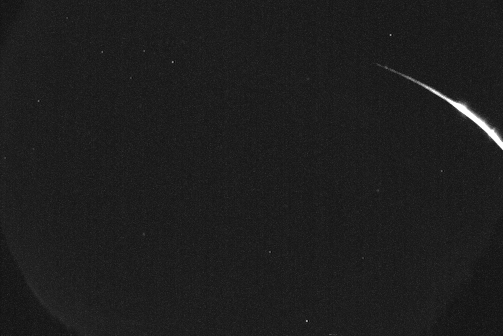
Radar captured the fireball's breakup#
Space physicist Juha Vierinen of the Arctic University of Norway in Tromsø led the team of European and U.S. scientists, Space.com reports. Their measurements came from a meteor-observing radar network, weather radar, infrasound stations, dash cams and security cameras.space.com 1 source for this line, starting with Space.com
The meteor radar detected a head echo, a radar signal from the cloud of plasma generated as the incoming rock heated the atmosphere and its own surface, according to Space.com. Four weather radars then recorded debris from the breakup as chunks fell into Cape Cod Bay as meteorites.space.com 1 source for this line, starting with Space.com
Ryan Volz, a radio scientist at Haystack Observatory and a member of the research team, told Space.com that the observation was fortunate. He said a comparable fireball would need to enter the atmosphere within about 62 miles of a similar meteor radar system for its head echoes to be detected.space.com 1 source for this line, starting with Space.com
The rock traveled from Jupiter's region#
The Boston Globe reports that the object was classified as a superbolide, an exceptionally bright meteor. Before entering the atmosphere, it was roughly 12,000 pounds and about 5 feet wide. The research findings appeared in The Astronomical Journal, according to the Globe.bostonglobe.com 1 source for this line, starting with The Boston Globe
By tracing its trajectory backward, researchers placed the farthest point of its orbit at roughly four times Earth's distance from the sun, in the region of Jupiter's orbit, the Globe reports. The paper said the rock likely came from the main asteroid belt between Mars and Jupiter or from a comet near Jupiter.bostonglobe.com 1 source for this line, starting with The Boston Globe
The rock entered the atmosphere at nearly 58,000 miles per hour, according to the Globe. CAI reports that scientists are analyzing the fireball's data to learn about the atmosphere and better forecast potential asteroid threats to people.bostonglobe.com+1 2 sources for this line, starting with The Boston Globe