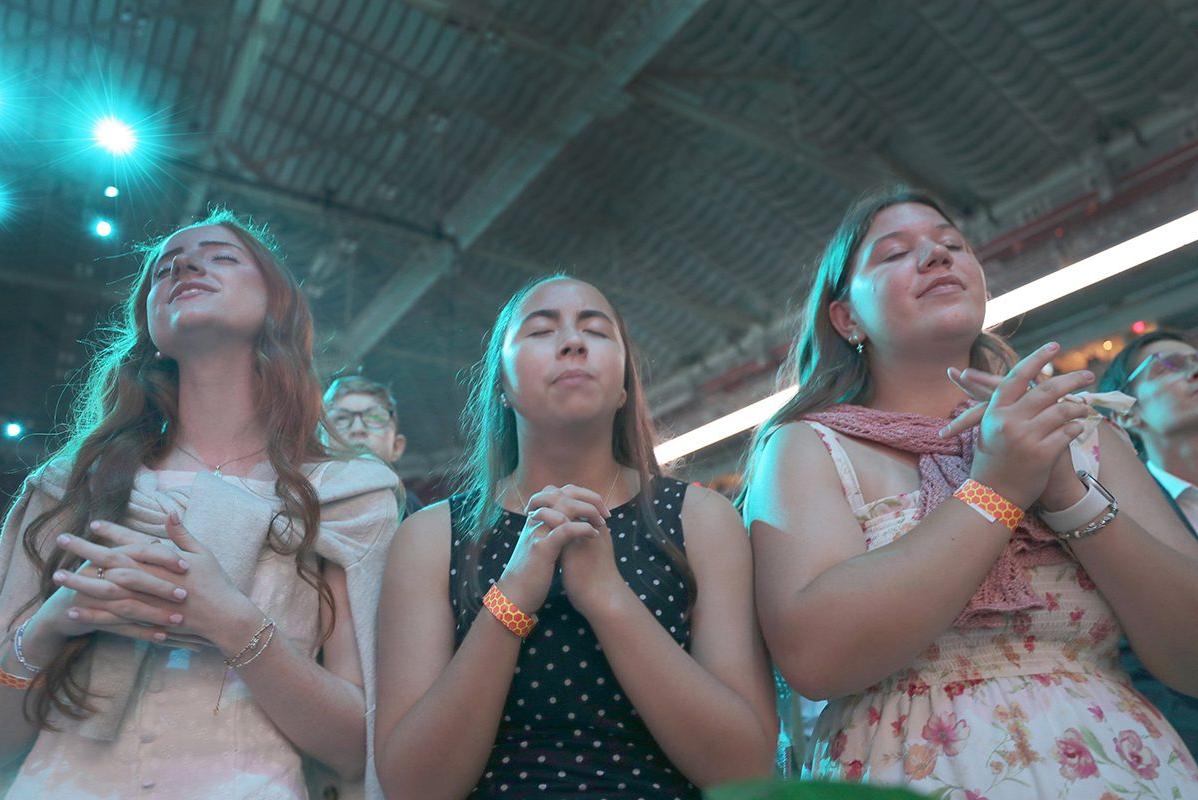

Older young adults report lower attendance#
Among adults ages 23 to 26, 27% said they attended services at least monthly, Anabaptist World reports. That group also had the lowest figures of any age group in the study for daily prayer, at 26%, and for saying religion was very important, at 27%.anabaptistworld.org 1 source for this line, starting with Anabaptist World
Half of the 23- to 26-year-olds identified with a religion, compared with 59% of those ages 18 to 22, according to Anabaptist World. The youngest adults were still below the overall U.S. figure of about 69% on that measure.anabaptistworld.org 1 source for this line, starting with Anabaptist World
Daily prayer was also less common among the youngest adults than in the population as a whole. Anabaptist World reports that 34% of respondents ages 18 to 22 said they prayed daily, compared with 46% of all U.S. adults surveyed.anabaptistworld.org 1 source for this line, starting with Anabaptist World
The figures leave questions about change#
The youngest adults were no more religious than people in the same age range in 2014, according to the Pew analysis cited by The Christian Post. Both young adult groups were substantially less religious than people their ages in 2007, the analysis found.christianpost.com 1 source for this line, starting with Christian Post
The Christian Post reports that Pew used data from its 2026 National Public Opinion Reference Survey and its 2025 Cross-Sectional Engagement Survey. Researchers compared those results with earlier Pew surveys, including studies from 2007, 2014 and 2023-24.christianpost.com 1 source for this line, starting with Christian Post
Rotolo told Anabaptist World that the youngest adults' higher religiousness compared with those just above them could have several explanations, including living at home or retaining values from their upbringing. He told Deseret News that the findings leave open what happens as those young adults leave home or start college.anabaptistworld.org+1 2 sources for this line, starting with Anabaptist World
- christianpost.comAre young adults becoming more religious? New findings reveal a complicated picture(opens in a new tab)
- anabaptistworld.orgYoungest U.S. adults report higher worship attendance than most age groups.(opens in a new tab)
- deseret.comYoung adults are showing up at church. Researchers aren’t sure what it means.(opens in a new tab)