
Mars and Jupiter share the morning sky#
According to NASA Science, the gap between the planets on both mornings is about 1.2 degrees, slightly wider than two full moons placed side by side. Jupiter is the brighter of the two points of light, with reddish Mars nearby in the southeastern sky.science.nasa.gov 1 source for this line, starting with NASA Science
The apparent closeness does not mean the planets are near each other in space. The astronomy site When the Curves Line Up puts the distance between them at nearly 370 million miles on November 15. It says the gap in their apparent positions is slightly smaller at the conjunction the following morning.whenthecurveslineup.com 1 source for this line, starting with When the Curves Line Up
Mercury and Venus also appear in the morning sky during the mid-November display, according to A Little Spark of Joy's account of MARCA. According to the guide, Earth's perspective makes the planets appear grouped, though they are not arranged in a straight line in space.alittlesparkofjoy.com 1 source for this line, starting with A Little Spark of Joy
Taurids and Leonids precede the supermoon#
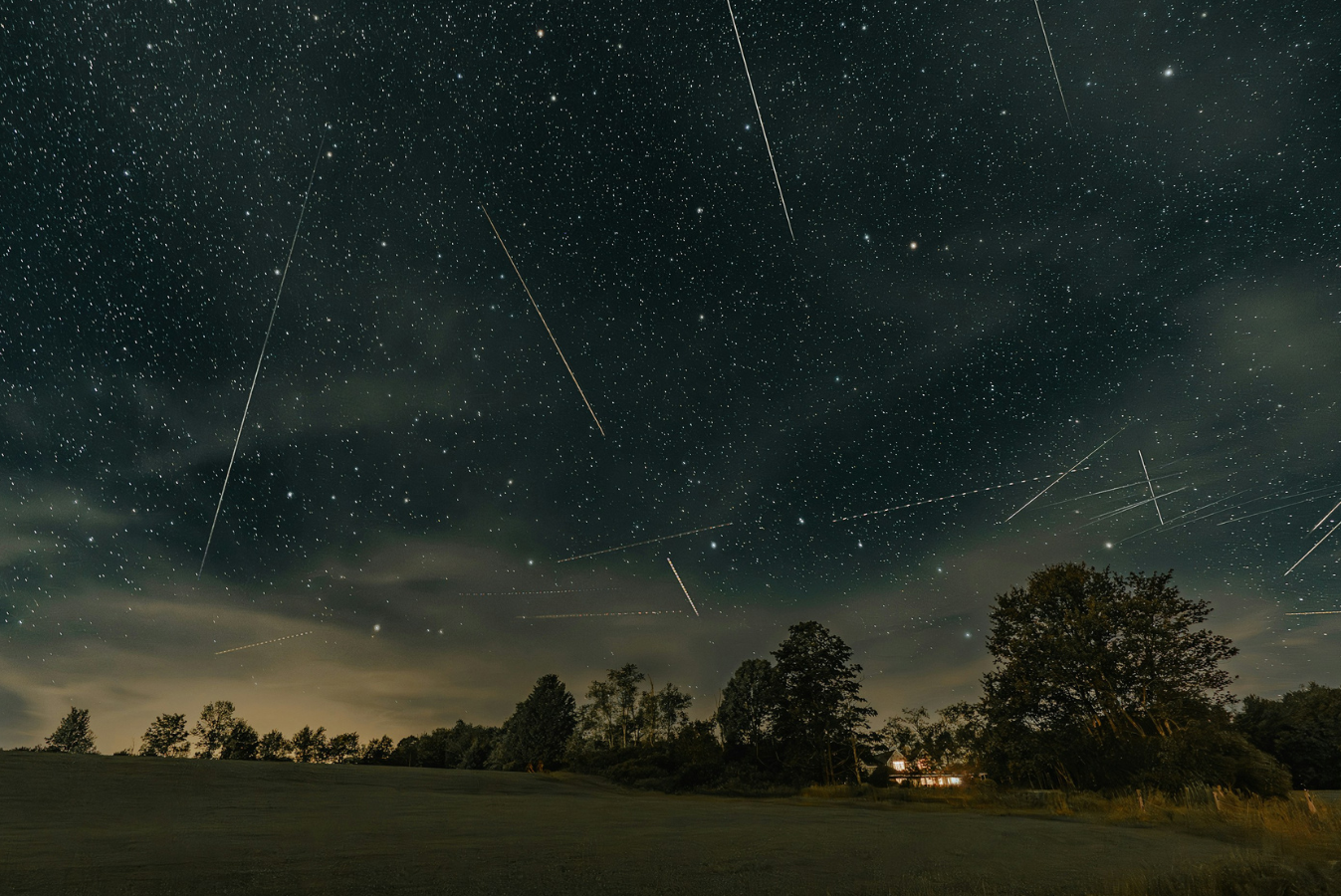
The Southern Taurids peaked around November 5, and the Northern Taurids peak around November 12, NASA Science says. Both showers take their names from Taurus, the constellation in the direction from which their meteors appear to originate. Each produces around five meteors an hour under ideal conditions, according to NASA.science.nasa.gov 1 source for this line, starting with NASA Science
Some Taurid meteors are bright enough to be called fireballs, meaning they outshine Venus in the night sky, the Los Angeles Times reports. Tim Thompson, science director at Mt. Wilson Observatory, told the paper that some are known as "Halloween fireballs."latimes.com 1 source for this line, starting with latimes.com
The Leonids have their best viewing opportunities before dawn on November 17 and 18, after the moon sets, NASA Science says. The shower could yield around 15 meteors an hour when conditions are ideal, but NASA notes that most observers see fewer.science.nasa.gov 1 source for this line, starting with NASA Science
According to NASA Science, November 24 brings a full supermoon, the first of three supermoons occurring consecutively. A supermoon is a full or new moon that nearly coincides with the moon's closest approach to Earth in its orbit, according to Wikipedia.science.nasa.gov+1 2 sources for this line, starting with NASA Science