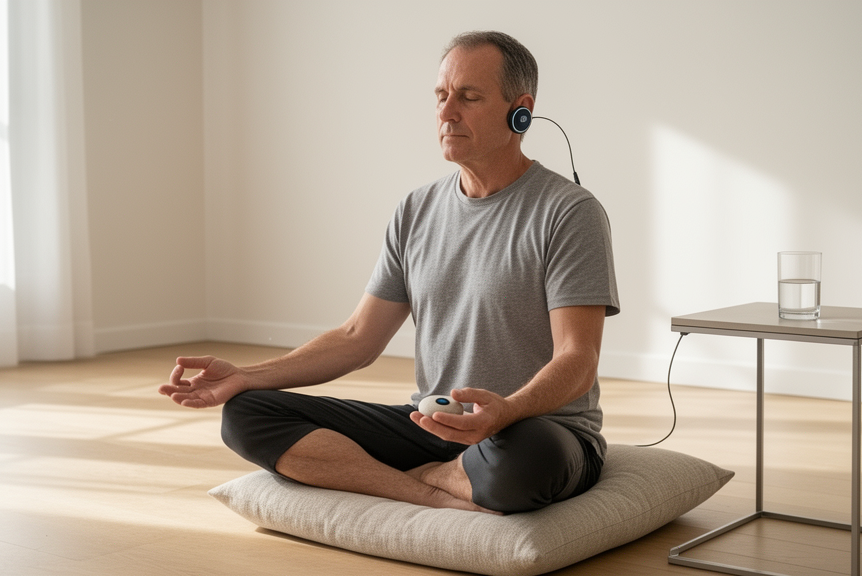
The trial tracked meditation across stages#
The analysis drew on a clinical trial of 106 people who practiced an intervention called Inner Engineering meditation, Bioengineer.org reports. The dataset contained RNA-sequencing profiles, measurements used to examine gene expression, from before meditation, during practice and at follow-up.bioengineer.org 1 source for this line, starting with Bioengineer.org
Meditation uses techniques to train attention and awareness, according to Wikipedia. In the study reported by Bioengineer.org, the researchers examined molecular patterns associated with one named intervention rather than treating every meditation practice as the same.bioengineer.org+1 2 sources for this line, starting with Bioengineer.org
Bioengineer.org says the team used the Connectivity Map, or CMap, to compare the meditation-associated signatures with established drug responses. The analysis looked for overlap in molecular patterns and pathways, rather than testing the pharmaceuticals as part of the meditation intervention.bioengineer.org 1 source for this line, starting with Bioengineer.org
The comparison focused on biological pathways#
Bioengineer.org describes the study as an exploratory search for shared molecular features between meditation and drugs with known relevance to neurophysiology. The team sought pathways and mechanisms that might help account for reported therapeutic effects of meditation.bioengineer.org 1 source for this line, starting with Bioengineer.org
Bioengineer.org reports that meditation is often used as a non-pharmacological adjunct approach for managing stress and supporting well-being. The outlet says its associated biological processes have largely been examined through psychological frameworks, while this study examined molecular profiles across stages of practice.bioengineer.org 1 source for this line, starting with Bioengineer.org
The reported finding concerns overlap in gene expression responses, not evidence that meditation and the identified pharmaceuticals have the same effects. Bioengineer.org says the researchers designed the comparison to identify biological pathways and mechanisms for potential investigation.bioengineer.org 1 source for this line, starting with Bioengineer.org
In separate research, scientists used artificial intelligence to design enzymes that recognize and cut selected protein targets, Phys.org reports. According to FierceBiotech, insitro will receive $40 million upfront from AstraZeneca to identify drug targets for liver and heart diseases, plus as much as $1.46 billion tied to development and commercial milestones.phys.org+1 2 sources for this line, starting with Phys.org
- bioengineer.orgMeditation study finds molecular overlap with drug responses(opens in a new tab)
- phys.orgAI designs working molecular scissors that recognize and cut selected protein targets(opens in a new tab)
- fiercebiotech.comAstraZeneca inks $1.5B insitro deal for AI-enabled target discovery of liver, heart disease drugs(opens in a new tab)