

A robotic rescue failed#
NASA selected Katalyst Space Technologies in September 2025 to attempt to extend Swift's working life by raising its orbit, Gizmodo reports. The company's robotic spacecraft, LINK, launched on July 3, 2026, according to EarthSky.earthsky.org+1 2 sources for this line, starting with EarthSky
LINK developed problems with its attitude control, the system that keeps a spacecraft pointed in the right direction. NASA said in August that LINK could not capture or boost Swift. The three-armed vehicle came no closer than about 12 to 15 kilometres and reentered the atmosphere in September, the Associated Press reported through Hindustan Times.hindustantimes.com 1 source for this line, starting with Hindustan Times
Hindustan Times reports that, once the rescue was abandoned, Swift returned to scientific observations. Its final observation came on October 20. NASA ended the science mission after the telescope fell below 275 kilometres, where increased drag prevented its instruments from staying steady on their targets.hindustantimes.com 1 source for this line, starting with Hindustan Times
- earthsky.orgNASA's Swift observatory is nearing reentry after a rescue attempt failed(opens in a new tab)
- gizmodo.comNASA’s Swift Observatory Will Crash Back to Earth This Week. Here’s Where Pieces May Land(opens in a new tab)
- hindustantimes.comThe science of re-entry, as Nasa’s Swift telescope is set to fall back to Earth this week | HT Explainers(opens in a new tab)
Swift's reentry remains uncertain#
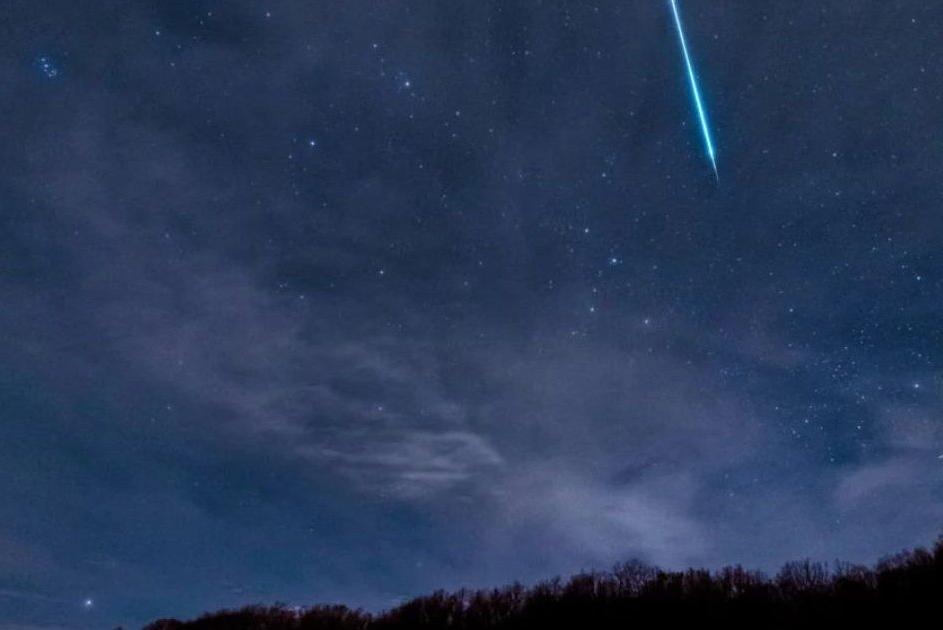
EarthSky reports that Swift is expected to burn up entirely during reentry. Gizmodo, however, reports that some internal components could survive. Astrophysicist Jonathan McDowell told Gizmodo that astronomy satellites can contain dense telescope mirrors and other equipment, and that at least 100 kilograms could survive.earthsky.org+1 2 sources for this line, starting with EarthSky
Brad Cenko, Swift's principal investigator at NASA's Goddard Space Flight Center, told the Associated Press that some tungsten and mirror parts could survive the heat, Hindustan Times reports. According to the outlet, the ocean is the likeliest landing place for any fragments that survive.hindustantimes.com 1 source for this line, starting with Hindustan Times
An earlier tracking message gave a broad reentry window and did not establish a location, KeepTrack reports. EarthSky says the Swift Last Light website provides information on whether the reentry might be visible from a particular location.keeptrack.space+1 2 sources for this line, starting with KeepTrack
- earthsky.orgNASA's Swift observatory is nearing reentry after a rescue attempt failed(opens in a new tab)
- gizmodo.comNASA’s Swift Observatory Will Crash Back to Earth This Week. Here’s Where Pieces May Land(opens in a new tab)
- hindustantimes.comThe science of re-entry, as Nasa’s Swift telescope is set to fall back to Earth this week | HT Explainers(opens in a new tab)
- keeptrack.spaceSWIFT Reentry Watch as Gamma-Ray Observatory's Orbit Decays(opens in a new tab)