The lunar calendar changed the date#
Both festivals should be observed when Chaturdashi is present at sunrise, committee chairperson Purushottam Bhattarai said, according to myRepublica. Religious scholar Ramchandra Gautam said Kukur Tihar is observed in Kartik, on the 14th day as the moon wanes.myrepublica.nagariknetwo… 1 source for this line, starting with myRepublica
In an earlier account, Hindi News24Online reported that the Chaturdashi period began at 11:47 a.m. on November 7 and ended at 11:27 a.m. on November 8. It cited Drik Panchang for the November 8 observance of Narak Chaturdashi.hindi.news24online.com 1 source for this line, starting with hindi.news24online
Kukur Tihar originated in Nepal and is dedicated to honoring dogs, according to the Wikipedia entry on the festival. People's Review reported that the observance is usually held on the second day of the five-day Tihar festival, making this year's third-day timing a departure from that custom.peoplesreview.com.np+1 2 sources for this line, starting with peoplesreview
- myrepublica.nagariknetwork.comNarak Chaturdashi being observed with dog worship and yamadeepdaan(opens in a new tab)
- hindi.news24online.comNarak Chaturdashi 2026: कब है नरक चतुर्दशी? जानिए छोटी दिवाली की तारीख और यम का ...(opens in a new tab)
- en.wikipedia.orgKukur Tihar(opens in a new tab)
- peoplesreview.com.npNepal observes Kukur Tihar by honoring dogs on the third day of Tihar(opens in a new tab)
Dogs and lamps honor religious traditions#
Gautam said the dog offerings are connected to a Hindu belief about Shyam and Sabal, two dogs at Yamaraj's gates. According to People's Review, the belief holds that feeding dogs helps the deceased pass into Yamalok, the realm of Yamaraj.peoplesreview.com.np 1 source for this line, starting with peoplesreview
Another religious account describes a dog accompanying Yudhishthira on his final journey to heaven, People's Review reported. The paper also noted that dogs are valued for their obedience and loyalty, as well as their role guarding homes.peoplesreview.com.np 1 source for this line, starting with peoplesreview
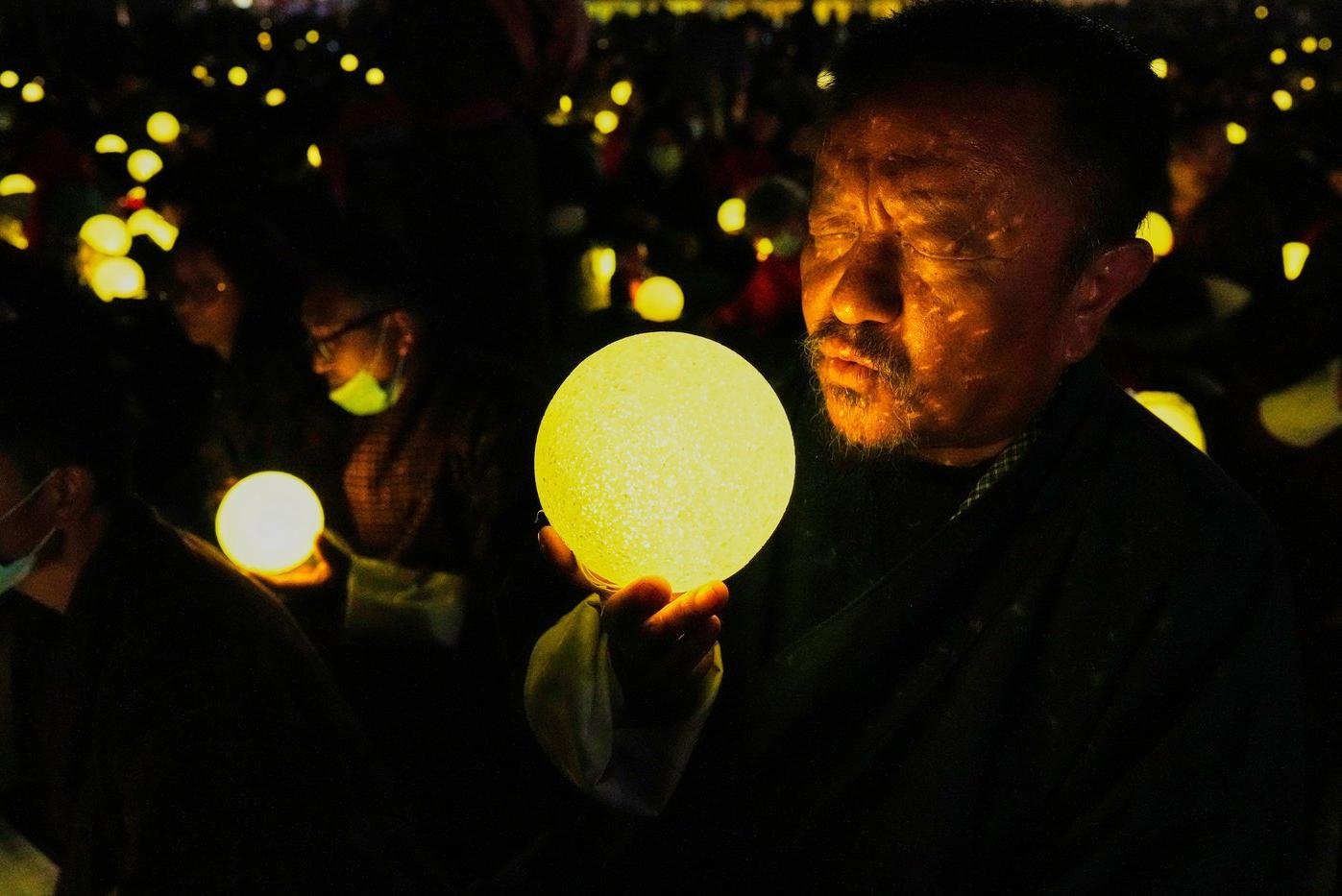
According to myRepublica, Narak Chaturdashi includes bathing early in the morning and making tarpan, an offering for deceased ancestors. Gautam said the observance also involves floating a south-facing oil lamp for Yama. The lamp ritual is called Narke Bagaune.myrepublica.nagariknetwo… 1 source for this line, starting with myRepublica