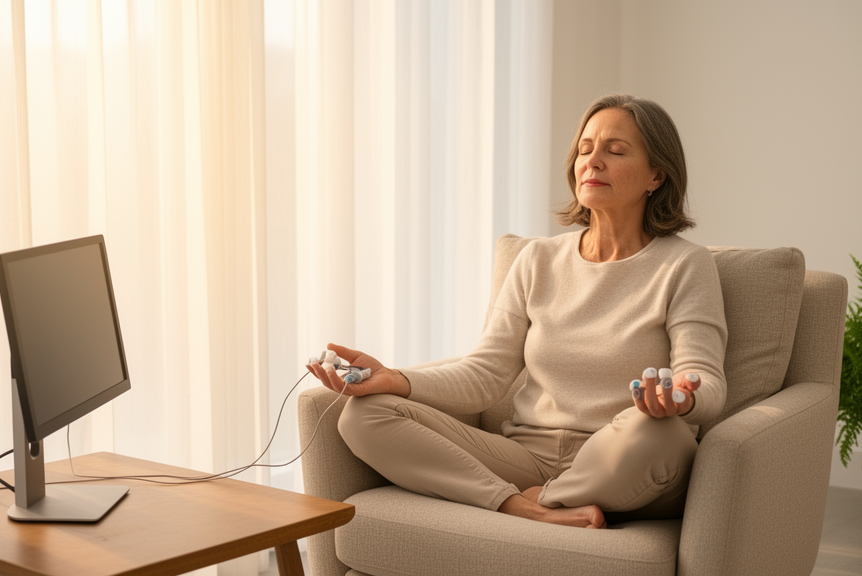
The trial compared two groups#
The 139 participants were healthy adults aged 18 to 55, The Times of India reports. According to UA.NEWS, none had practiced yoga before. They were randomly assigned either to the yoga program or to a waiting list, and 125 people completed the study.timesofindia.indiatimes.…+1 2 sources for this line, starting with The Times of India
One instructor led sessions averaging 50 minutes, according to UA.NEWS. The routine combined a warm-up and postures with breathing, guided yoga nidra relaxation and meditation. People on the waiting list were given general advice to stay active and were to be offered yoga practice later.ua.news 1 source for this line, starting with UA.NEWS
Mood was the main outcome, measured with the Positive and Negative Affect Schedule, News-Medical reports. Participants also completed tests of processing speed and short-term memory and rated their sleep, according to UA.NEWS. News-Medical reports that assessments were scheduled at the start and after 45 days.news-medical.net+1 2 sources for this line, starting with News-Medical
- timesofindia.indiatimes.com45 days of common yoga practice improves memory, sleep and brain connectivity, Pune study finds(opens in a new tab)
- ua.newsA Pune yoga trial found differences in mood and sleep scores(opens in a new tab)
- news-medical.netScientists scanned people's brains before and after 45 days of yoga. Here's what changed(opens in a new tab)
Scores differed on several measures#
UA.NEWS reports that, after researchers adjusted for starting scores, positive affect was about four points higher in the yoga group than in the control group. Negative affect was 3.5 points lower. The yoga group also scored about 1.2 points lower on sleep quality, indicating better self-reported sleep.ua.news 1 source for this line, starting with UA.NEWS
On a short-term memory test, the yoga group did better at recalling number sequences in their original order and had a higher overall score, UA.NEWS reports. The groups did not differ on the reverse-order task or the symbol matching test.ua.news 1 source for this line, starting with UA.NEWS
A subgroup had resting-state functional magnetic resonance imaging, or fMRI, with eyes closed to examine communication among large brain networks, News-Medical reports. According to News-Medical, the main analyses covered all 139 people assigned to the groups, using group median scores in place of missing values. The outlet reports that the imaging analysis accounted for age, sex and education.news-medical.net 1 source for this line, starting with News-Medical